

If you’ve ever visited Delhi, or read about it, chances are you’ve been acquainted with the famed market on Janpath. Here, the average middle-class shopper chugs on Depaul’s coffee served at the heart of the market, while the more affluent are seen hopping the jumble of modish cafes and eateries perched at its outset.
But none of us are like Gita didi, who has been selling junk jewellery here every single day since the past 23 years. Every day, she takes a two hour commute from her choppy locality in Ghaziabad — dissected by haggles with autorickshaw drivers and naps in the public bus to save on the fare of commuting by private transports.
I met her on a sunny afternoon under a designer canopy of leaves. This, I learnt, has been her usual place of business — in line with shoe shiners and idle wanderers sucking on their beedis, lost in a silo far away from the swarm of noises around them. “Here, I don’t see the sun in winters, and in summers, it’s so hot, pucho mat. We can’t light a fire either, as it’s not allowed on account of this being a public area,” she tells me.
I begin a conversation with her expecting anecdotes of warmth — a cup of chai, a heated conversation, or maybe moments of gloomy wonder in one’s own company on the way to work. All she tells me is, “If work comes, warmth comes with it; if there’s no work, one clasps their hands and bears the harsh winds.”
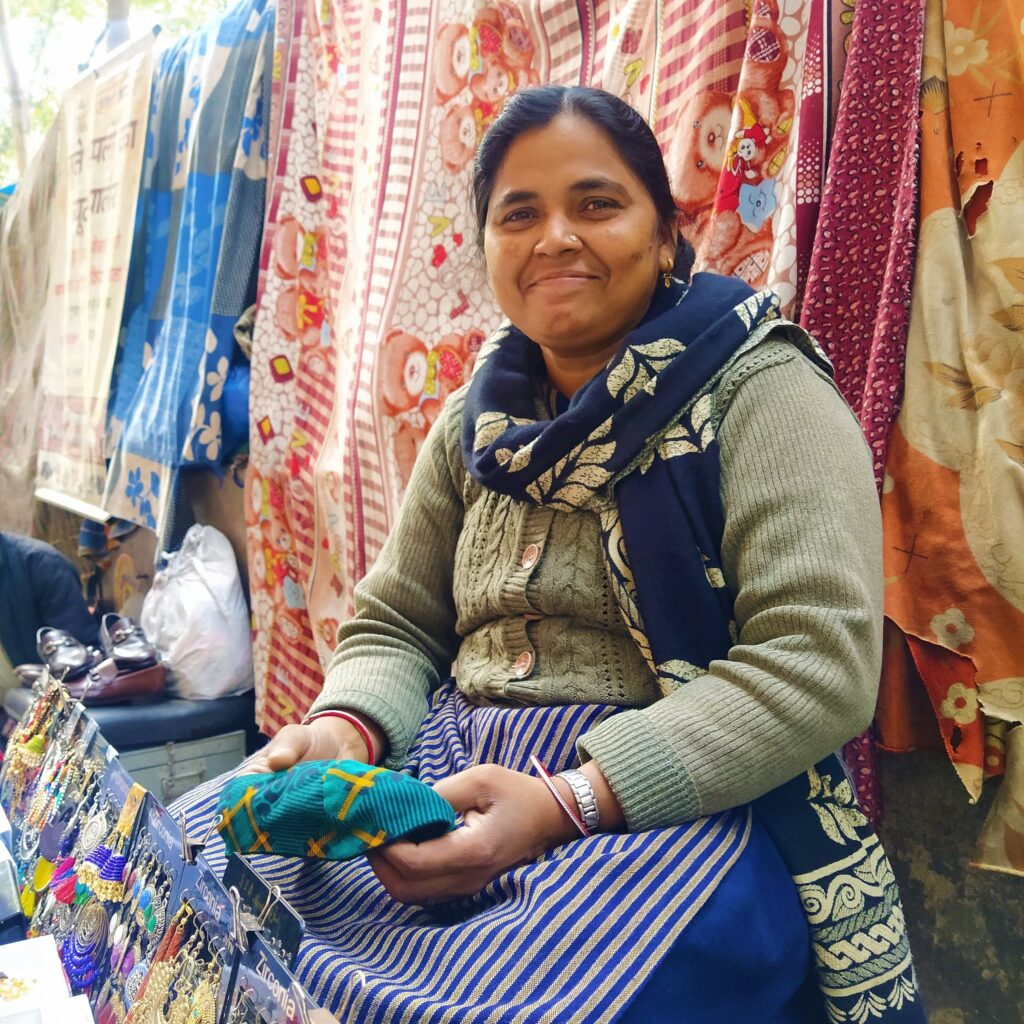
In the past few decades of her life, Gita didi has become ignorant to the play of nature. Her heart and mind are focussed on making the most of her human potential, which should, in her expectation, contribute to the progression of her progeny. “I’ll be honest, I never got to study, but one thing I achieved — I made sure my children studied well, became capable. A woman should be able to take care of her own care, that’s what matters,” she says. Didi has three kids. Her husband passed away some 16 years ago.
Evidently, the grasp for survival comes in different shapes and sizes. For some, it is clutching on to sensory experiences as a reservoir of hope; for others, it is the mechanical action of cementing life with a routine, unaffected by the good or bad.
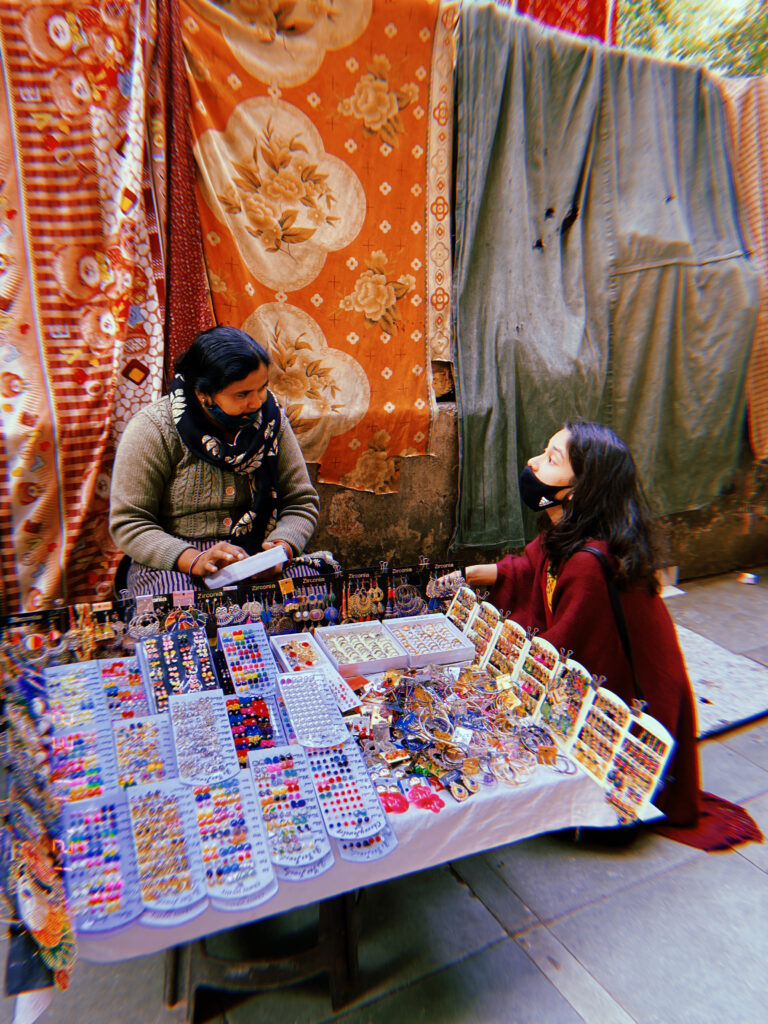
“Whether it’s cold or hot, one always has something to fret about. The key is to keep going about your karma. I remember, for instance, how every winter season my stream of customers would thin. That’s the kind of thing that sticks with me for it affects daily work,” she says. This kind of day-to-day survival fills the breathing space of this thirty-something woman. Seasons come and go, the smog while crossing Laxmi Nagar burns her eyes just as it burns mine, but for her, Delhi has been–and always will be–only one thing: a city of possibilities. Every day, every hour spent in this shadowed spot is gone as the next arrives. Nothing makes an impression of a memory, only a cumulation of karmic days leave behind an impression of a lifetime.
Read about the winter memories of Dhruv Shankar, owner of the iconic Adarsh Stores in Delhi, here.

So my images fascinated on our winter visit to Delhi a few years ago. On our our first visit to Delhi the maze of rickshaws dodging people, the ubiquitous presence of cows, and the unfamiliar spices on the Dodd and emanating along the crowded streets come first to mind. I once saw a cobra spring from a basket as well.
That’s true, these are elements you’ll find all across Delhi. In its metropolitan reputation, most people forget to look out for the little things that colour life in the capital!
Pingback: Freedom, Somewhere in Bengaluru – The Thought Behind
Pingback: Freedom, Somewhere in Bangalore | Ria Gupta